
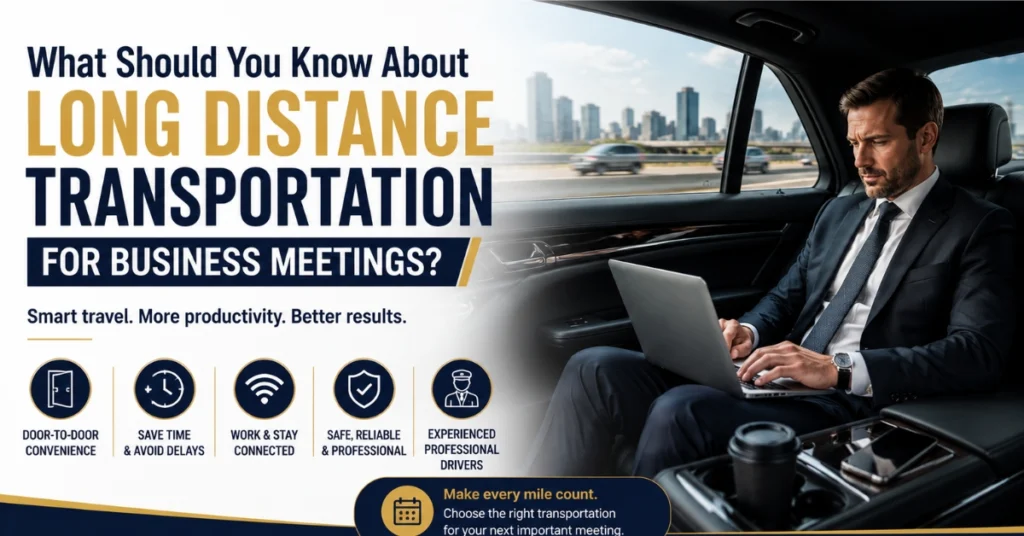
A business meeting 150 to 300 miles away creates a real travel choice. It may be too far to drive yourself, yet too short for flying to save much time.
Flying means reaching the airport first. You also need time for check-in, security, boarding, and the final ride. TSA tells travelers to allow time for parking, check-in, boarding passes, and security.
Long distance transportation removes several of those steps. One car can pick you up at home, a hotel, or the office and go straight to the meeting. That makes it a useful business trip travel option.
For out of state transportation, do not compare only flight time with drive time. Compare the whole trip from door to door. For many teams, that can mean less rush, fewer handoffs, and more time to prepare before the meeting starts each day. If schedule control, privacy, and usable work time matter, it may be better to hire a private driver.
The Challenges of Intercity Corporate Travel
Driving vs flying for business should be judged by total time and effort. A one-hour flight may look faster than a four-hour drive, but the real gap can be smaller.
Before the flight, you must reach the airport. Then come check-in, airport security wait times, boarding, and gate delays. Flight delays can move the meeting plan. After landing, you still need a final ride.
Renting a car for a business trip adds more steps. You must collect it, load your bags, drive in an unfamiliar area, and return it later.
Direct ground travel avoids those handoffs. This is why it is one of the main alternatives to short flights for trips that can be done by road in a few hours.
Flying still makes sense on many routes. But for a 150 to 300-mile meeting, compare door-to-door time, work time, cost, and schedule risk before you book.
Why Executives Choose a Long Distance Transportation
Long distance transportation lets the traveler focus on the meeting instead of the road. With a corporate car service, the rider does not need to drive, find parking, stop for fuel, or return a rental car.
A private driver for a day also gives more room for change. A meeting can run late, lunch can be added, or another office stop may appear. Keeping the car makes those changes easier.
Door to door transportation keeps the trip simple. The car starts at the chosen pickup point and goes to the business address. There is no airport, rental desk, or flight time in the middle.
Executive car hire should still be compared with care. Ask how the provider charges for wait time, extra stops, tolls, overtime, parking, and the return trip. A clear quote should show what is included before the car leaves.
Turning Travel Time into a Mobile Workspace
A four-hour road trip can become useful work time when the passenger does not have to drive.
The rider can review a deck, answer email, read a contract, prepare notes, or take calls in the car. That can make a direct drive more useful than airport time.
If you need a car service with WiFi, ask how it works. Some cars use built-in WiFi; others depend on a mobile hotspot. Signal quality can change by route. Ask about charging ports too.
Black car service can help with focus and gives more control than a gate or shared shuttle. Still, the chauffeur is in the vehicle, so very sensitive calls need care.
For a good private work environment, look for rear-seat space, low cabin noise, power, stable data access, and a driver who respects quiet time.
Unmatched Reliability for Strict Agendas
A business meeting may have a fixed start time. That makes travel planning more important than a bold promise.
Road trips can face crashes, road work, bad weather, and closed lanes. FHWA explains that travel-time reliability is about how predictable a trip is, not just the average drive time.
A reliable car service should work backward from the meeting time. It should review traffic, stops, and a safe buffer. An early morning pickup should be confirmed ahead.
A professional driver can watch traffic and change routes when a better path is open. This can help avoid traffic delays. It cannot remove every road risk.
Be careful with any guarantee on time arrival with no limits. No provider controls crashes, closures, or severe weather. Ask how the company plans for delays.
Also ask what happens if the car or driver becomes unavailable. A strong provider should have a dispatch and replacement plan.
Rideshare vs. Private Executive Transport for Long Trips
Uber Black vs private driver is not the same choice on a 250-mile trip as it is on a short ride across town.
Rideshare can work well for a short trip. A long business trip needs more planning around vehicle class, luggage room, driver continuity, billing, pickup time, and return.
The long distance taxi vs limo question should go beyond the brand name. Comfortable long road trips depend on seat support, rear legroom, cabin noise, climate control, ride quality, and bag space. These details matter more after hours on the road.
A sedan may suit one traveler with light bags. A luxury SUV car service may fit several people, larger luggage, or a need for more rear space.
Driver rules vary by state and city. If a provider says licensed chauffeur, ask what license or permit applies. Also check insurance, driver screening, and operating authority.
A booked private service usually gives more control because the main trip details can be agreed before travel starts.
Essential Features of a Premium Business Fleet
Do not choose from car photos alone. Ask how the service works on travel day.
Look for these points:
- Late model cars: Ask which class will arrive and what happens if that car becomes unavailable.
- A dedicated black car fleet: Ask if the provider controls the booked vehicle or may send an unknown third party.
- Enough room: Match the car to the number of riders, bags, trip length, and need to work.
- Charging and data: Ask about power ports, WiFi, hotspot use, and expected coverage.
- Business credentials: Check the insurance and operating rules that apply in the pickup and travel area.
- Driver standards: Ask how drivers are screened, trained, and assigned to long trips.
- Clear business travel billing: The quote should state wait time, tolls, parking, overtime, gratuity, and cancel terms.
- Corporate limo account tools: Regular clients may need central booking, saved trip details, receipts, and one billing contact.
- Live dispatch help: Make sure someone can answer the phone if plans change during the trip.
A lower quote is not better if key costs appear later. Compare the full service, not just the first number.
How to Coordinate Intercity Travel for Your Team
Good corporate transportation booking starts with the meeting plan.
1. Set the fixed times. Note the meeting start, target arrival time, pickup point, end time, and all known stops.
2. Pick one-way or round-trip service. A one-way car service works when the traveler will stay overnight, fly back, or use another ride later. A round-trip driver can be better when the return time may change.
3. Use hourly car service for several stops. This may fit a day with meetings, a site visit, lunch, and an evening event. Keeping one car can cut the need for new pickups.
4. Send the full rider details. Include the name, phone number, rider count, luggage, access needs, and car choice.
5. Share the real route. Give every planned stop and a fair time window. A three-stop day should not be booked as a basic transfer.
6. Check the price terms. Review wait time, extra hours, tolls, parking, route changes, payment, cancel rules, and after-hours help.
7. Confirm the trip again. Before travel day, check the pickup time, vehicle class, contact method, and final meeting address.
These steps help planners compare quotes on the same facts and reduce changes caused by missing details.
Secure Your Executive Transportation Today
For a 150 to 300-mile meeting, the lowest fare may not give the lowest total cost. Work time, airport transfers, rental steps, delays, and a tight schedule all have value.
A private car can turn the route into one continuous trip. The rider can work, make approved calls, rest, or prepare for the meeting while a professional driver handles the road. The service is most useful when timing matters, privacy matters, or the return plan may change.
Before you book a corporate ride, ask for an executive transportation quote based on the real agenda. Send the pickup point, meeting time, rider count, stops, luggage, return plan, and vehicle need.
Then compare the full offers. Check total price, vehicle fit, business credentials, dispatch help, driver standards, and billing terms. Reliable business travel comes from a plan built around the actual meeting day, not a generic price per mile.
Frequently Asked Questions
When is Long distance transportation better than flying for a business meeting?
A long distance transportation can make sense for trips of roughly 150 to 300 miles when airport time, connections, rental cars, or flight schedules reduce the advantage of flying. A direct ride also lets you work or prepare during the trip instead of driving yourself.
Can a private driver handle multiple business stops in one day?
Yes. You can book an hourly car service when your schedule includes several offices, client meetings, meals, or site visits. Keeping the same vehicle and driver can make a multi-stop itinerary easier to manage than arranging separate rides.
What should companies check before booking executive transportation?
Companies should review the vehicle class, driver qualifications, insurance, business billing options, cancellation terms, wait-time charges, tolls, and dispatch support. For recurring travel, a corporate account can also simplify reservations and receipts.
Should I book a one-way or round-trip car service for a business trip?
Choose a one-way car service when you already have a separate return plan. A round-trip driver is often more practical when the return time is uncertain, or you need transportation between several locations during the same business trip.